Let’s face it- modern life is a constant bombardment to our nervous system. From non-stop horrifying current events to the sweeping technological changes that have completely rewritten our human experience, our neural networks are barely keeping up (let alone our weary depleted souls). Over the millions of years that humans have walked this Earth, it is only a small blink of an eye that we have adopted this breakneck pace of modern technological living, and our nervous systems simply haven’t had time to adapt (arguably for the better; let’s not trade our human-ness for unyielding meaningless productivity) It’s not surprising that we are overwhelmed both individually and as a culture. The currents of this crumbling & hyper-stimulating world continually disrupt and overwrite our inner wiring. By replacing deep human and Earth-based connection with screens, emptiness, and meaningless (yet forced) over-production, we are left feeling exhausted, untethered, disconnected, anxious, numb, and alone.
We believe that to channel this nervous energy out of our bodies, we need to create a dedicated grounding wire for our nervous system in order to recenter. Whether it’s a sensorium reset button (breathing practices), a gradual rewiring of our mental programming (meditation practices), or intentional cooking for enhanced gut-health – there are so many different scientifically-backed avenues to explore. Weaving these different elements throughout your day can increase your capacity to show up for yourself, the people in your life, the communities that you are building, and your unique way of creating a better world for future generations – all of which are desperately needed right now. (And sprinkling in focused intentionality can help us in the journey of soul retrieval- more on that here). What are these elements? At the Dayton Wellness Collective, we group them into 5 different categories under the umbrella term “grounding practices”. But before diving into these five categories, let’s first explore several current uses of the word ‘grounding’.
“We believe that to channel this nervous energy out of our bodies, we need to create a dedicated grounding wire for our nervous system in order to recenter.
The term ‘grounding’ has several different applications these days. In the world of psychology, to ground means to escort one’s focus back into the present moment, thereby gently bypassing anxiety filled thought loops. The five senses lay the groundwork for this exercise, redirecting your attention to tangible things you can hear, see, feel, smell, etc. Another variation of ‘grounding’, sometimes referred to as ‘earthing’, is the study of the exchange of negative ions when our skin comes in contact with the Earth. This is believed to have a positive impact on our bodies, including decreased inflammation, improved healing, and better sleep cycles. But I’d love to offer a third interpretation of grounding, which for the Dayton Wellness Collective, is the cornerstone of which we have built our entire foundation.
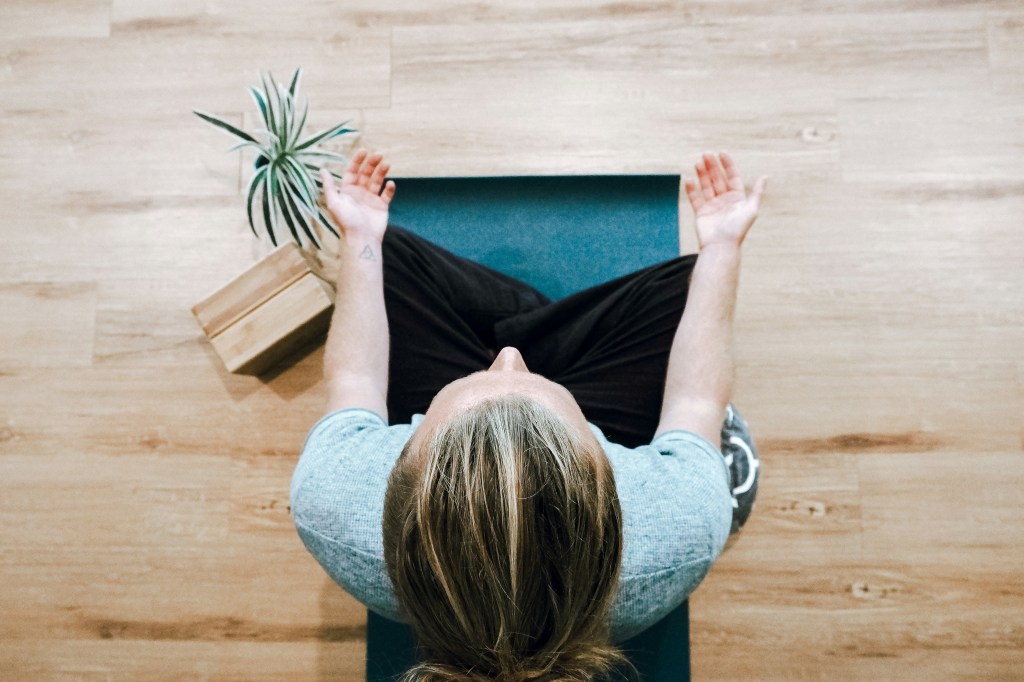
We define grounding as holistic practices that facilitate connection with our mind, body, soul, the seasons, the Earth, and each other. Ways to pull back into our ancestral roots and facilitate these sacred interconnections that have been lost to time, to technology, to a gradual stripping away of our human-ness. A way to slow down, drift inward, and reset. A grounding wire life line. A way to re center ourselves when life feels unsteady. A portal into our intuition. A pathway to holistic wellness. And the most beautiful part? It’s already inside us. It’s been explored and written about for thousands of years (no purchase required!) And although the cost is one of our most valuable resources – our time & attention – it gives so much more in return than what we pour in. We have sorted these grounding practices into 5 different aspects – somatic, cerebral, Eartheral, nutrimental, and communal.
We define grounding as practices that facilitate connection with our mind, body, soul, the seasons, the Earth, and each other
Somatics – The word somatic means “of, relating to, or affecting the body” which is a major element of grounding. Because our organs and muscles harbor the chemical aftermath of the deluge of stress hormones dumping into our bloodstream, physical ramifications are numerous. The toll on our body from chronic stress is high, prompting several leading somatic psychologists to spend the last 90+ years finding methods of release for their clients. For those of us whose attention resides more in our mind than our bodies, somatic practices are an extremely helpful tool. It could be as simple as increasing awareness to our senses, or internal experiences via a body-scan. In doing so, we can bring our awareness to symptoms of dysregulation such as fluctuations in heart rate, increasing tension in a part of our body, or how deep or shallow we are breathing. Somatics help us not only identify areas in our body that are out of balance, but also teaches us the methods to recalibrate our equilibrium.

Cerebrals – from the latin word ‘cerebellum’ describing the brain, the modern use of cerebral often refers to thinking / the mind; a vast ocean of mystery, comprising as many neurons as stars in the milky way. It’s no wonder it remains a constant frontier for science – we don’t have the instruments sensitive enough to measure all of the brain’s prowess let alone the inexplicable and intangible “mind” (perhaps this explains why the mind and the brain are often described as two separate entities) Although the mind can feel hard to quantify and challenging to qualify – the brain and its hormones & chemicals are a bit more measurable. These reactions are a bridge between our somatic self and our cerebral self as hormonal and chemical responses shape our health, our perspectives, our habits, and our life. And as science is starting to uncover through quantum research – perhaps even the framework of our reality. Because it has such a significant impact on shaping our life, having access points in which we can cultivate a relationship with our mind is an imperative aspect of grounding. There are many variations of mindwork that can let us strengthen that bond including (but not limited to) meditation, the use of mantras, creative imagery, visualization, and mental rehearsal.

Earthereal – Technological advancements over the last 100 years have improved the quality of life for many but it’s not without its disadvantages. A glaring and ever growing problem with tech and modern living is how we have slowly (almost completely) severed our daily physical and emotional bond with our planet. Whereas significant time outdoors was a regular & daily occurrence before, now it often needs to be scheduled. Grounding aspects that come from fostering our connection with the Earth are plentiful, and inspiring more research from the scientific community every year. Although we don’t need these studies to prove what we have felt in our hearts all along – the Earth is healing – it is nice to have the validation as well as a deeper insight as to how. From forest bathing to sun gazing, earthing to listening to natural frequencies, the Earth (and the cosmos) is a never ending vessel of which we can tap into and reregulate our human body. And of course, give back to & protect fiercely as it is and should remain a symbiotic relationship.

Nutrimental – The (rarely used) word nutriment means “That which nourishes; a nutrient; anything which promotes growth and repairs the natural waste of animal or vegetable life; food”. Many cultures have practices that date back thousands of years (ex. Ayurveda) that supports the importance of preparing and ingesting food & drink with intentionality – from curative fasting methods to the creation of an infusion or meal with herbal healing properties. What we consume and how we consume it is a beautiful opportunity to explore different grounding practices. Whether it’s studying the different properties of herbs to add to a dish or tea or finding recipes that compliment your dominant dosha type, cultivating a relationship to your nutrimental practices can directly impact not just your physical health, but your mental and emotional health as well. Recent studies have shown how the gut houses our second brain (emotional regulation and bio feedback from foods consumed) intrinsically and separately from the brain. We know that highly processed foods lead to poor overall health, disrupting and ravaging our gut microbiome and keeping our bodies in a constant state of inflammation. Our relationship with our food and our drink can be complicated, especially when clean, organic produce is inaccessible for many and most of the affordable options are laced with an addicting amount of sodium and sugar, as well as an absurd amount of chemicals. Although it would seem of utmost importance to tend to this area of our body with intentionality and care, we acknowledge that having the time and resources to pour into clean consumption is a privilege (but one we hope will be designated as a human right in the very near future)
Communal – And speaking of intentionality – intentional community, we believe, is a vitally important grounding practice. Humans were never meant to be solitary creatures – perhaps why the presence of positive relationships is so vital to a long and happy life (and consequently, how loneliness can lead to a host of chronic health problems) When we group together in a perceived safe space, we receive a beautiful wave of oxytocin, dopamine, and serotonin. And given our current political and social media climate that seems to feed on divisiveness, fear, and “othering”, we believe that to lean into a safe and loving community is the exact balm that our souls are desperately needing right now.

It’s not surprising that we, as a society, are unwell, ungrounded, disconnected, overworked, and increasingly distracted from reality. We live in an society that treats our bodies as expendable, our attention as a product, and the yearning of our souls as something to commodify and manipulate. But from this state of being, we can not show up and be the change we desperately hope to see in the world. So let’s dive into these practices. Let’s remember our ancestral gifts of connection, waking up our DNA that has been hiding underneath the chaos and distraction of modern life. We owe it to ourselves, and to our future generations. We can no longer be bystanders as our world falls into chaos and violence. We need to put on our oxygen mask first, sure, but we can’t stop there. We must use our privilege to help our most vulnerable, create strong safety nets in our communities, and tend to each other. Now is the time to roll up our sleeves and be the change we hope to see in the world. And if not now, when?
-Carolyn
If you’re interested in learning more, come check out one of our workshops in Dayton, OH!



Leave a Reply