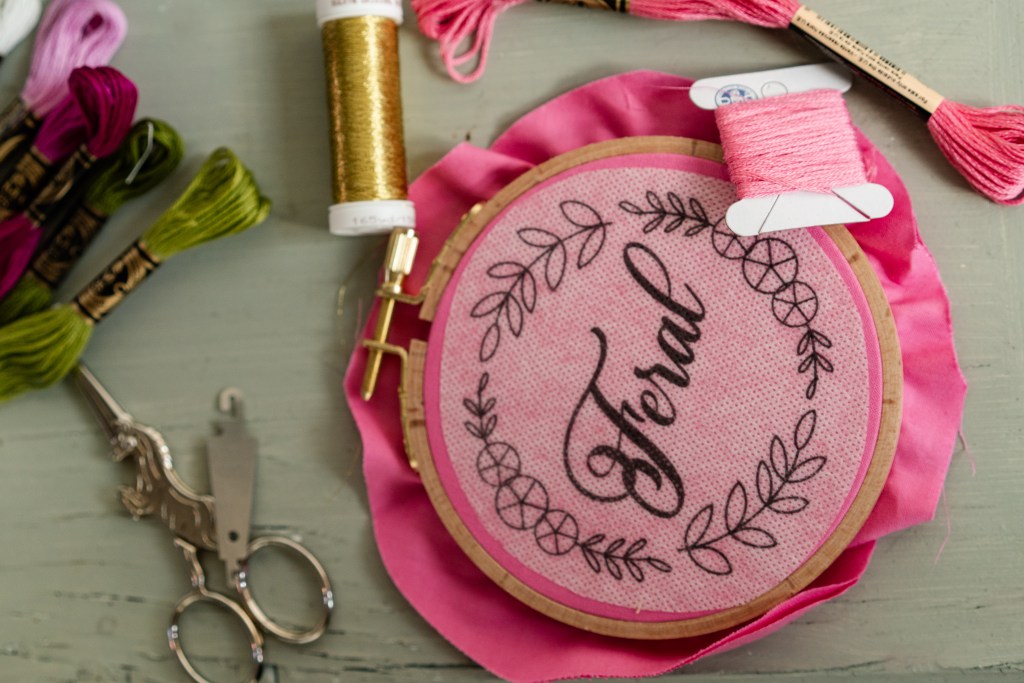
I walked into The Barrel House last Autumn, excited for my first ‘crafty meetup’ hosted by Angie aka The Savage Stitcher. I had heard amazing things about this monthly gathering, specifically how the feeling of crafts + community seemed to fill emotional cups that were drier than previously realized. The bar itself is a cozy little downtown treasure filled with love, positivity and a large variety of local brews. But with the added sparkle of a group of individuals working on their textile art projects collectively? All the while laughing and sharing and delving into their creativity? It literally felt like an enchanted current filled the space with a warm feeling of ease and welcoming and a ‘come as you are’ vibe. I ordered a cider and found a comfy lounge seat next to Emily, who had brought an embroidery project she had recently started.
A wonderful wave of magic flows through us and pulls us into limbic resonance when we gather in a safe place with others. It feels like an invisible thread, weaving our hearts and souls together, creating not just the feeling of closeness, but also the space to be ourselves. Almost as if our nervous systems were not individual, separate, or self contained but rather deeply affected by those closest to us. Like we can, as the limbic resonance concept proposes, unconsciously synchronize with the nervous systems of those around us. And if those folx are safe, warm, and welcoming? Enter in the flow of oxytocin through our bodies – a hormone that can enhance social bonding, trust, resilience, and feelings of safety. Feelings that are profoundly comforting and grounding to pack animals such as the human race. And feelings that, amidst the loneliness epidemic that we find ourselves navigating, are increasingly hard to come by. Limbic resonance is believed to facilitate non-verbal communication, emotional attunement, and healing connections, all of which can be the foundation of a crucial human capacity: empathy.
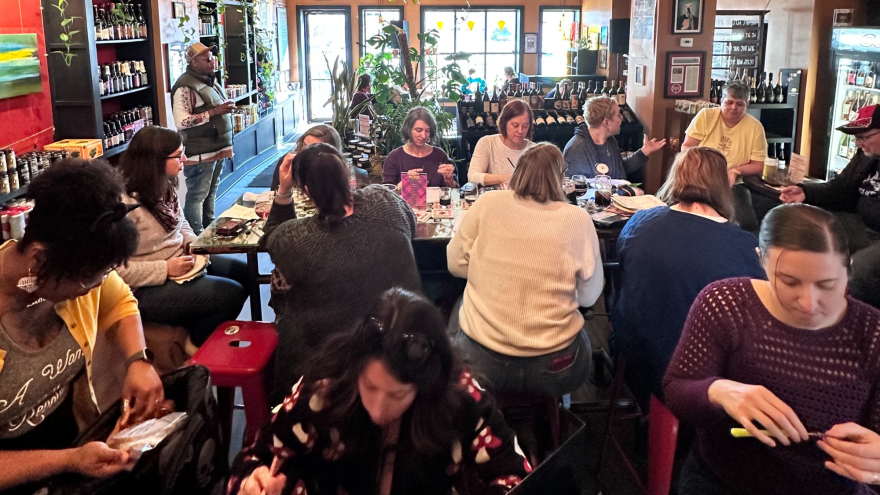
Photo taken by Angie at a Crafty Meetup at the Barrel House in Dayton, OH
Empathy, described as a “psychological superglue that connects people and undergirds cooperation and kindness” is a state of relating to another in a state of emotional witnessing. In an article titled Cultivating Empathy, Ashley Abramson outlines the profound importance of this biological trait including
- Motivating prosocial behaviors such as forgiveness, volunteering, and helping
- Overriding noncooperation, causing people to be more generous and forgiving
- Promoting better relationships with strangers
- Mitigating bias and systemic racism
Perhaps empathy was the main driver behind what many of the attendees were working on that lovely afternoon – a mixture of textile art and political dissent. Although empathy has recently gotten the boot from a surprising amount of podcasters, politicians, and pastors as they believe it “manipulates caring people into accepting all manner of sins including abortion access, LGBTQ+ rights, illegal immigration, and certain views on social and racial justice”, it seems that many folx simply refuse to let that part of their humanness go. And judging from the conversations that were taking place that day, they were also urgently trying to find solutions for local problems through networking and knowledge sharing. All while stitching an embroidered hoop with emphatic pleas and expletives whilst sipping on a couple cold ones. (What can I say? We are multi-taskers).
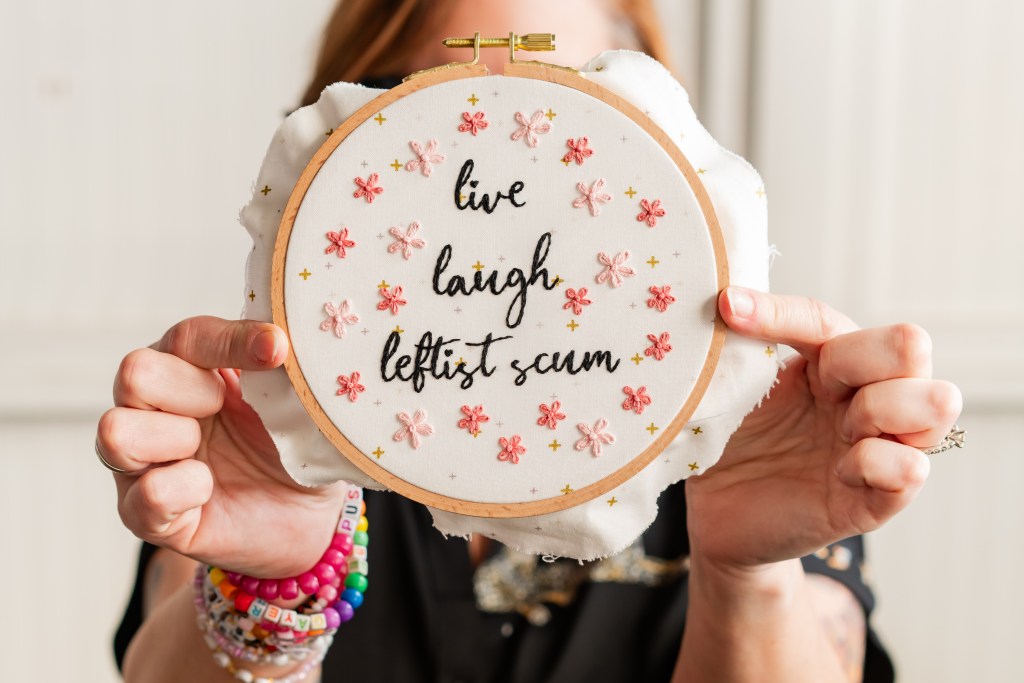
Political art makes social issues visible. Knitting, crocheting, sewing, embroidery, and other fiber arts have never culturally earned the title of “art” (likely because of its entwinement with traditional women’s labor, believes Val Smith, owner of Sugarcamp Bandanas) but its message remains just as poignant. There is a long history of using fiber arts to protest, advocate, and bring awareness to social justice issues from abolitionist quilting to suffragette embroidery. The women’s liberation movement used ‘the subversive stitch’ – a term coined by art historian Rozsika Parker to describe the artistic dissent using a medium that was previously seen as genteel. In the early 2000s, Betsy Greer came up with the word blend ‘craftivism’ to describe this growing artform. She asserted that key characteristics of craftivism are personal expression, sustainability, accessibility., and community engagement. Personal expression is a hallmark of art, a way to imbue a part of ourselves in our creation. The other three aspects, however, seem to shine a light on how our ancestors may have used and approached textile labor. Sustainable and accessible of course, as goods weren’t as massively distributed as they are today. And community engagement was deeply embedded in the cultures of yesteryear, when sewing circles were a way to get chores done as well as exchanging information they wouldn’t hear otherwise.
Sharing stories, giving insights, and bathing in limbic resonance while working with textiles is making a splashy comeback. And thanks to craftivism events popping up all over Dayton (and across the nation) we have an opportunity to:
- soothe our nervous system with crafting
- meet new allies
- learn about local volunteering opportunities
- network with others
- debrief feelings with others who share your perspective
And perhaps most importantly in times like these – to cling onto our empathy with every act of activism, whether big or small. Because the ability to identify and understand another’s situation with curiosity, love, and mutual respect, is the only way we can repair and rebuild. As MargaretMead once said:
“Never doubt that a small group of thoughtful, committed citizens can change the world; indeed, it is the only thing that ever has.”
If this sounds like balm for your creative soul, join us for our upcoming craftivism events, and meet some of Dayton’s finest 🙂
Saturday April 18th Moon Swoon + Craftivism (featuring Val Smith with Sugar Camp Bandanas)
Friday June 12th Moon Swoon + Craftivism (featuring Angie the Savage Stitcher)
 Dayton Wellness Collective
Leave a comment